Explain the Commonalities and Difference Between Active Transport
Energy is used to change the shape of the carrier protein. Secondary active transport - Unlike the primary active transport secondary active transport uses electrochemical energy to transport ions.

Active Transport Osmosis Diffusion Cellular Energy Passive Transport Teaching
Active transport is a rapid process.
. Molecules move across cell membranes by two major processes diffusion or active transport. Active and passive transport are biological processes that move oxygen water and nutrients into cells and remove waste products. Primary active transport - This type of active transport involves the use of ATP energy to move molecules against their concentration gradient.
Diffusion occurs through a concentration gradient. Passive transport moves molecules WITH the concentration gradient high to low while active transport moves molecules AGAINST the. Primary active transport is the transport of molecules against a concentration gradient by the use of energy from ATP.
Diffusion is the passive movement of molecules along a concentration gradient of higher. Primary active transport secondary active transport. Active transport requires an input of energy usually ATP while facilitated transport does not.
Difference Between Diffusion and Active Transport Definition. Primary active transport In this process of transportation the energy is utilized by the breakdown of the ATP Adenosine triphosphate to transport molecules across the membrane against a concentration gradient. There are two types of active transport namely Primary active transport and secondary active transport.
In active transport carrier proteins are required. For large or multiple particles and drops of fluid or when a cell needs to move materials against the concentration gradient active transport is the way to go. In facilitated diffusion substances move down their concentration gradients from high to low concentration and this process does not utilize energy obtained by the splitting of ATP.
Thus it requires energy. Secondary active transport uses the energy of the electrochemical gradients instead of the chemical energy of ATP. Primary active transport uses the energy of adenosine triphosphate ATP which degrades to adenosine diphosphate ADP and phosphate and releases energy.
Active transportation is influenced by temperature. Active transport can transport chemicals against their concentration gradients while facilitated transport cannot. Facilitated diffusion on the other hand involves protein channels or carriersDuring active transport the molecules move up the concentration gradient.
Passive transportation is not influenced by temperature. Facilitated diffusion uses both gated channel proteins and carrier proteins in transport. - Active transport uses carrier proteins.
Osmosis is the net movement of water down the concentration gradient whereas active transport is the movement of substances against the concentration gradient. Differences between active transport and facilitated diffusion. Active transport requires chemical energy because it is the movement of biochemicals from areas of lower concentration to areas of higher concentration.
The difference between active and passive transport is that active transport requires energythe cell has to expend ATP molecules. What is the difference between Osmosis and Active Transport. - Active transport is an active process.
Osmosis does not require energy whereas active transport does. Primary Active Transport. Active transport is an active process meaning it requires the use of ATP whereas facilitated diffusion is a passive process meaning it does not need ATPTo carry out the process active transport only requires carrier proteins.
19 rows Active and Passive Transport Definition. Passive transport is a comparatively slow process. In carrier-mediated active transport a protein in the plasma membrane.
Whereas facilitated diffusion is a passive process and does not require energy. Active and passive transport. Transpires in one direction.
Explain the similarities and differences between facilitated diffusion and active transport. The main difference between the two is that active transport requires chemical energy in the form of ATP while passive transport requires no outside energy. Diffusion is the movement from a high concentration of molecules to a low concentration of molecules.
Both processes utilize carrier proteins. Secondary active transport is the transport of two different molecules across a transport membrane using energy in other forms than ATP. Molecules can diffuse across membranes through the phospholipid bilayer or using a special protein.
On the other hand passive trasport moves biochemicals from areas of high concentration to. June 27 2011 Posted by DrSamanthi. The key difference between active transport and facilitated diffusion is that the active transport occurs against the concentration gradient hence utilizes energy to transport molecules across the membrane while the facilitated diffusion occurs along the concentration gradient hence does not utilize energy to transport.

Difference Between Active Transport And Passive Transport In Tabular Format Passive Transport Active Transport Biology Systems Biology
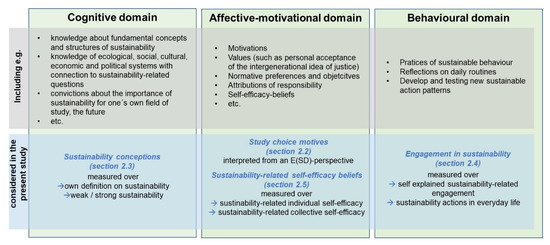
Sustainability Free Full Text I Wanted A Profession That Makes A Difference An Online Survey Of First Year Students Study Choice Motives And Sustainability Related Attributes Html

Pdf Transport And Social Exclusion Where Are We Now


Comments
Post a Comment